What to Do After a Car Accident in Las Vegas
Short answer
After a car accident in Las Vegas, call 911 and get a police report, take photos of both vehicles and the scene, get checked by a doctor the same day even if you feel fine, and report the crash to your own insurer without giving the other driver's insurance company a recorded statement. Nevada gives you 2 years from the date of injury to file a personal injury lawsuit under NRS 11.190.
What to do in the first hour after a Las Vegas car crash
Call 911 first, even if the cars still run and nobody is screaming. A Las Vegas Metropolitan Police Department or Nevada Highway Patrol officer creates a written report with the date, location, drivers, plates, insurance information and any citation. That single document becomes the backbone of your claim. Crashes on I-15, the 215 Beltway and US 95 usually draw Nevada Highway Patrol; surface streets like Spring Mountain, Charleston and Flamingo usually draw Metro.
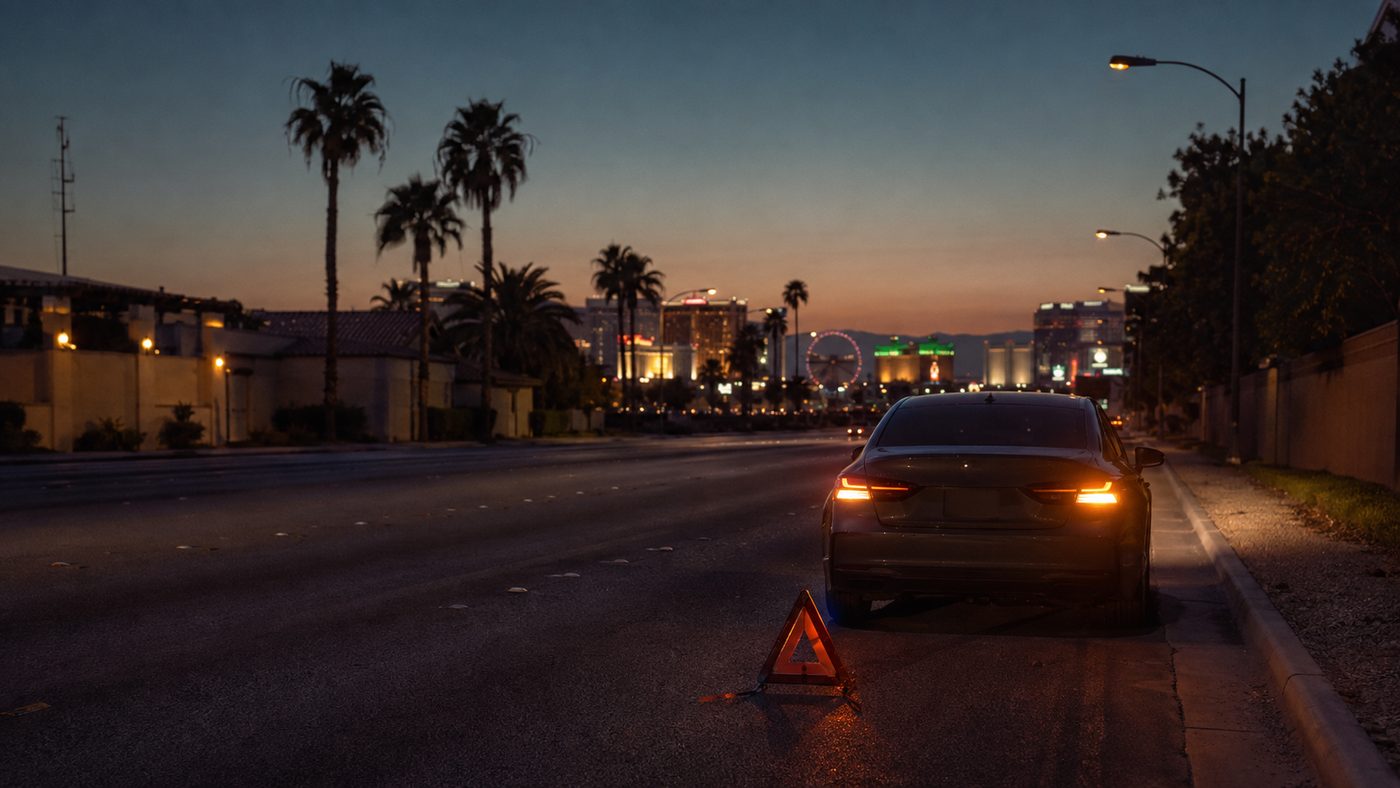
Move out of live traffic if the car can move and it is safe. Sahara, Tropicana and Las Vegas Boulevard see secondary crashes when a damaged car sits in a lane. Turn on hazard lights. If the car will not move, get yourself to the shoulder or a sidewalk rather than standing between vehicles.
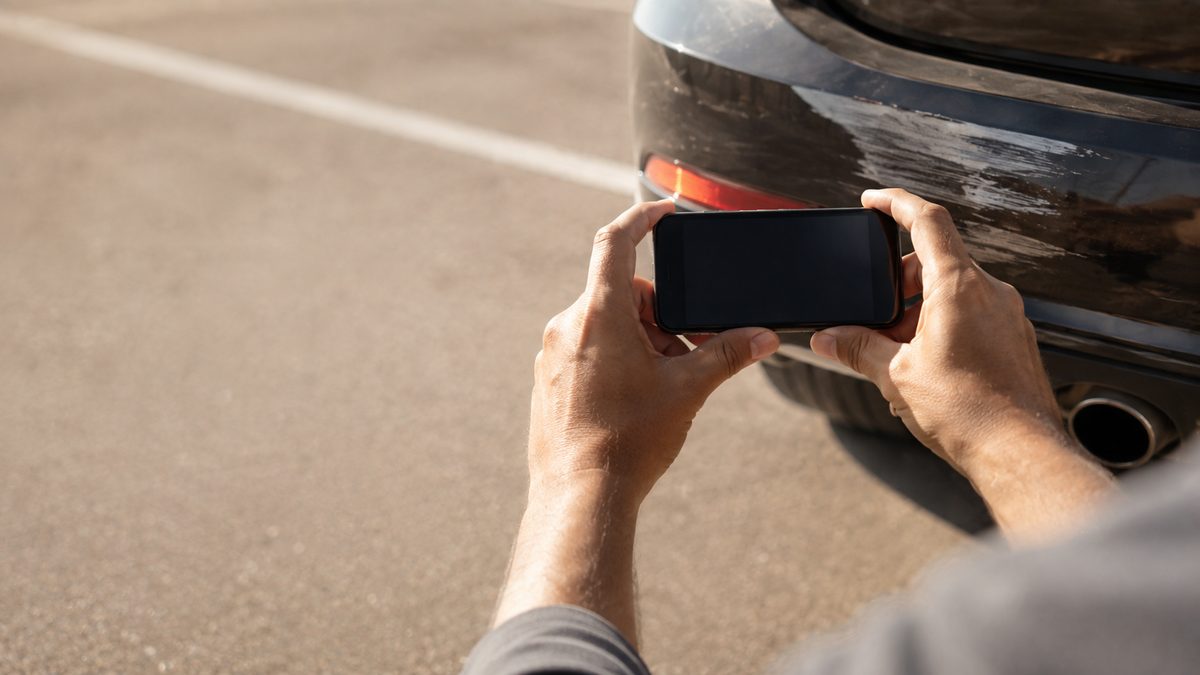
Photograph everything before the cars get towed. Both vehicles from several angles, the license plates, the interior if an airbag went off, skid marks, debris, the traffic signal, the lane you were in, the street signs and the other driver's license and insurance card. Photos taken at the scene settle arguments that come up months later about impact angle and damage severity.
Say as little as possible about fault. Do not tell the other driver you are sorry or that you did not see them. Nevada uses modified comparative negligence, and a casual comment at the scene can be repeated back to you later as an admission. Give the officer the facts of what happened and leave the conclusions to the investigation.
Get names and phone numbers of witnesses before they drive off. Independent witnesses are the hardest evidence to find later and the most persuasive when two drivers tell different stories. A rideshare passenger, a delivery driver or a bystander who saw the light color can change how a claim is evaluated.
Should I go to the hospital after a car accident even if I feel fine?
Get evaluated the same day or the next day, even when nothing hurts yet. Adrenaline masks pain for hours. Neck and back injuries, concussions and internal bleeding often announce themselves a day or two later. Sunrise Hospital, UMC and University Medical Center's trauma center handle serious crashes, and urgent care clinics around Las Vegas handle the rest.
A gap between the crash date and your first medical visit becomes the insurance company's favorite argument. Adjusters read a two-week gap as proof you were not really hurt or that something else caused the pain. Same-day or next-day treatment ties the injury to the crash in the record, which is what matters when the claim is evaluated.
Tell every provider that you were in a car crash and describe every symptom, not just the worst one. If your shoulder hurts but your headaches are what keep you up, say both. Medical records only contain what you report. A symptom you never mentioned is a symptom the insurer will say never existed.
Follow through on the plan you are given. If the doctor orders imaging, physical therapy or a specialist referral, go. Missed appointments and abandoned therapy get used to argue you recovered. If you cannot afford a visit or cannot get time off work, say so out loud to the provider so the reason lands in the chart instead of looking like you simply stopped caring.
How to get a Las Vegas car accident police report
Ask the responding officer for the event or report number before you leave the scene and write it down. That number is how you request the report later. Metro reports are requested through the Las Vegas Metropolitan Police Department records process, and Nevada Highway Patrol reports come through NHP. Reports typically take days to become available.
Read the report as soon as you get it and check every fact. Officers work fast at chaotic scenes, and reports contain wrong plate numbers, misspelled names, wrong insurance carriers and diagrams that do not match the damage. Errors can be addressed, but only if someone catches them.
A citation issued to the other driver helps your claim but does not decide it. Insurance companies are free to dispute fault even when their driver got a ticket, and they often do. The reverse is also true. Not receiving a citation does not mean you were blameless in the eyes of an adjuster.
If police never came out because the cars were drivable and nobody reported an injury, create a record yourself. Photograph the other driver's documents, write down what happened while it is fresh, and file a report so there is an official paper trail. In hit-and-run cases especially, a police report is often what your own uninsured motorist coverage requires.
What to tell your insurance company after a crash in Nevada
Report the crash to your own insurer promptly. Most auto policies require notice, and delay can create a coverage fight on top of your injury claim. Give your insurer the basic facts: date, location, the other driver's information, that police responded, and that you are getting medical care.
Do not give the other driver's insurance company a recorded statement. Their adjuster works for a company whose job is to pay as little as possible. The call often comes within a day or two, sounds friendly, and asks how you are feeling before you know the answer. A cheerful "I'm okay" recorded on day two follows the case forever.
Do not sign medical authorizations that the other side sends you. A broad authorization lets an insurer pull years of unrelated records looking for an old back complaint to blame. Relevant records get provided at the right time, in the right scope, and that is a decision worth making with a lawyer rather than by mail.
Do not accept a quick check. Early offers arrive before you know whether the pain is a strain or a herniated disc, and cashing one usually ends the claim in full. Once you sign a release, worsening symptoms and later surgery are your problem, not the insurer's.
Look at your own coverages while you are at it. Medical payments coverage and uninsured or underinsured motorist coverage on your own policy matter enormously in Las Vegas crashes involving minimum-limits drivers and hit-and-run drivers. Request the full policy, not a summary.
How long do I have to file a car accident claim in Las Vegas?
Nevada law gives you 2 years from the date of injury to file a personal injury lawsuit, under NRS 11.190. Wrongful death claims carry the same 2-year deadline. Miss it, and the claim is generally over regardless of how clear the other driver's fault was.
Two years sounds long and disappears fast. Medical treatment runs for months. Records and billing take time to collect. Negotiations with an adjuster can stretch on. A case that looked simple can suddenly need a lawsuit filed, and a lawsuit takes preparation, not a phone call the week before the deadline.
Some situations shorten the practical timeline. Crashes involving a government vehicle, a city bus or a public employee can involve separate notice requirements with much earlier due dates. Commercial trucking crashes involve evidence like driver logs and electronic data that gets overwritten if nobody demands preservation early.
Talking to a lawyer does not commit you to filing a lawsuit. It puts a calendar and an evidence plan around your claim so the deadline is never the thing that ends it. Consultations at Michael Hua Injury Law are free, and you can reach the office at (702) 487-9000.
How does Nevada's comparative fault rule affect my recovery?
Nevada follows modified comparative negligence. If you share some of the blame, your recovery is reduced by your percentage of fault. At 51 percent or more fault, you recover nothing at all. That threshold is why fault fights in Las Vegas crashes get intense.
Insurance companies use the rule offensively. Expect arguments that you were speeding, following too closely, distracted by your phone, or that you could have braked sooner. On a left-turn collision at a Las Vegas intersection, both drivers routinely get blamed and the split is argued out of the physical evidence.
Evidence pushes the percentage. Vehicle damage patterns, the resting position of the cars, signal timing, witness accounts, 911 audio, and camera footage from nearby businesses or a residential doorbell all shape the analysis. Footage overwrites in days at many locations, which is why early requests matter.
Do not talk yourself into a percentage. Drivers regularly assume they are mostly at fault based on something an adjuster said or something they blurted out at the scene. Fault is a legal question that is decided on evidence, not on a phone call the week after the crash.
What paperwork and records should I keep after a Las Vegas crash?
Keep a single folder with the police report number, photos, the other driver's information, every medical bill and record, and every letter from any insurance company. Claims fall apart on missing paper more often than on disputed facts.
Write down your symptoms and limits as they happen. Sleep you lost, work you missed, the days you could not lift your kid, the workouts you stopped, the drives that now make you anxious. Months later nobody remembers week three, and a contemporaneous note is far more credible than a memory reconstructed for a demand letter.
Document lost income with something an insurer can verify. Pay stubs, a letter from your employer, work schedules, or for a rideshare driver or self-employed worker, the earnings history from before and after the crash. Las Vegas has a lot of tipped and gig income, and that income still counts when it can be shown.
Keep repair estimates, tow bills, storage fees, rental car receipts and any out-of-pocket cost, including mileage to and from medical appointments. Small receipts add up and they are easy to lose.
Be careful on social media. A photo of you at a pool party or a post saying you feel great gets pulled into a claim file and used against you. Consider posting nothing about the crash, your injuries or your activities until the claim is resolved.
When to call a car accident lawyer in Las Vegas
Call before you give a statement to the other driver's insurer, before you sign anything, and before you accept any offer. Those three moments do the most damage to claims, and all three usually happen in the first two weeks.
Some cases especially need a lawyer early: anyone taken to the hospital, a crash involving a commercial truck or a company vehicle, a hit-and-run, a disputed-fault intersection collision, a crash where the other driver was uninsured, or any crash that killed someone. Evidence in those cases has to be preserved before it disappears.
At Michael Hua Injury Law, consultations are free and there is no fee unless the case wins. Michael Hua is licensed in Nevada and is the trial attorney on the cases the firm handles. The team works claims from the first call through settlement, which means the same people who open the file are the ones dealing with the adjuster and the records.
The office is at 4700 Spring Mountain Rd, Las Vegas, NV 89146, and the phone number is (702) 487-9000. If your crash happened outside Nevada, the firm refers the case to an attorney licensed in that state rather than handling it here.
This guide is general information about Nevada car accident claims, not advice about your specific crash. Facts change outcomes, and no article can tell you what your case needs. A short conversation about the details can.
Questions people ask next
How long do I have to file a car accident claim in Nevada?
Nevada gives you 2 years from the date of the injury to file a personal injury lawsuit, under NRS 11.190. Wrongful death claims also carry a 2-year deadline. If the 2 years run out before a lawsuit is filed, the claim is generally gone no matter how badly you were hurt or how clearly the other driver was at fault. Claims against a government entity, such as a crash with a city or state vehicle, can involve extra notice requirements that come due much sooner, so those are worth asking a Nevada attorney about right away rather than waiting.
Do I have to call the police after a minor Las Vegas fender bender?
Call the police even when the damage looks minor. A Las Vegas Metropolitan Police Department or Nevada Highway Patrol report locks in the date, location, drivers, insurance information and any citation issued. Without it, the other driver can later deny the crash happened or claim you caused it, and you are left arguing your word against theirs. If officers do not respond because the cars are drivable and nobody reports an injury, exchange information yourself, photograph the other driver's license and insurance card, and file a report at a Metro station or through the DMV so a written record exists.
Should I talk to the other driver's insurance adjuster?
You are not required to give the other driver's insurance company a recorded statement, and it is usually a mistake to give one early. Adjusters ask about your injuries in the first days, when you may not yet know you have a disc injury or a concussion, then use your own words to argue you were barely hurt. You can confirm the basics of who was involved and let them know you are getting medical care. Everything past that, including questions about prior injuries, speed and how the crash happened, is better handled after you have talked to a lawyer licensed in Nevada.
What if the crash was partly my fault?
Nevada uses modified comparative negligence. You can still recover if you were partly at fault, and your recovery is reduced by your share of the blame. At 51 percent or more fault, you recover nothing. That rule is why insurance companies work so hard to shift a slice of blame onto you, arguing you were speeding, distracted or could have avoided the crash. Do not assume you are mostly at fault because an adjuster said so or because you apologized at the scene. Fault in a Las Vegas crash gets decided from physical evidence, the police report, statements and sometimes camera footage.
What if the other driver had no insurance or fled the scene?
Your own uninsured or underinsured motorist coverage is the usual path when the at-fault driver has no insurance, too little insurance, or drove off. That coverage sits on your own auto policy and pays for your injuries, though your insurer then acts like the opposing side on the value of the claim. Hit-and-run crashes in Las Vegas make the police report especially important, since many UM claims require prompt reporting to law enforcement. Check your declarations page for UM or UIM limits, and get a copy of the full policy rather than relying on what an agent says over the phone.
How much does it cost to talk to a car accident lawyer in Las Vegas?
Consultations at Michael Hua Injury Law are free, and the firm works car accident cases on a contingency basis, meaning no fee unless the case wins. You can call (702) 487-9000 or visit the office at 4700 Spring Mountain Rd, Las Vegas, NV 89146. Michael Hua is licensed in Nevada and is the trial attorney on the cases the firm handles, and the team works claims from the first call through settlement. If your crash happened in another state, the firm refers the case to an attorney licensed there.
Talk to someone about your own case
General guidance only goes so far. Tell us what happened and we will look at your situation for free.
This guide is general information about how injury claims usually work, not legal advice about your case. Reading it does not create an attorney-client relationship. Deadlines and rules change and exceptions apply, so confirm anything you plan to rely on with an attorney. Michael Hua is licensed in Nevada; claims arising in other states are referred to an attorney licensed there.
Written with AI assistance and published automatically. Laws and deadlines change, so this may be out of date. Call us and we will tell you what applies to your case today.