Do I Need a Lawyer for a Slip and Fall in a Vegas Store?

Short answer
You do not need a lawyer for every slip and fall, but you almost always need one when you were treated by a doctor, missed work, or the store is blaming you. Nevada gives you 2 years from the date of injury to file a personal injury lawsuit under NRS 11.190, and store surveillance video is often overwritten in far less time than that.
Do I need a lawyer for a slip and fall in a Las Vegas store?
Hire a lawyer if you saw a doctor, missed work, or the store is already suggesting the fall was your fault. Those three facts turn a minor incident into a claim with real money attached, and the moment real money is attached, the store's insurer starts building a defense. You are not required to have an attorney to make a claim in Nevada, but you are negotiating against a professional adjuster who handles these files every day.
You probably do not need a lawyer if you got up, felt fine, never treated with any provider, and have no bills. A bruise with no medical care is not a case worth anyone's fee. Be honest with yourself about the injury before you spend energy on a claim, and be equally honest about the opposite situation, which is a back or knee that keeps getting worse three weeks later.
The middle group is the one that gets hurt twice. People with a real injury who try to handle it alone often settle for the medical bills already incurred, then find out later that the shoulder needed an MRI, injections or surgery. Once you sign a release with the insurer, the claim is closed even if your condition changes.
A free consultation costs you nothing but the phone call. Michael Hua Injury Law at 4700 Spring Mountain Rd in Las Vegas takes those calls at (702) 487-9000, and there is no fee unless the case wins. This article is general information about Nevada premises claims, not advice about your specific fall.
What do I have to prove to win a slip and fall against a store in Nevada?
Falling in a store is not enough. Nevada premises liability requires proof that a dangerous condition existed and that the store knew about it or should have known about it and failed to fix it or warn you. A grape on the floor for thirty seconds and a grape on the floor for two hours are legally different situations, even though the fall looks identical.
Notice is the fight in most Las Vegas store cases. If an employee created the hazard, such as an over-waxed floor, a leaking cooler the store never repaired, or a spill from a stocking cart, notice is direct. If a customer dropped something, you have to show the hazard was there long enough that reasonable inspections would have caught it. That is where sweep logs, inspection schedules and time-stamped surveillance video decide the case.
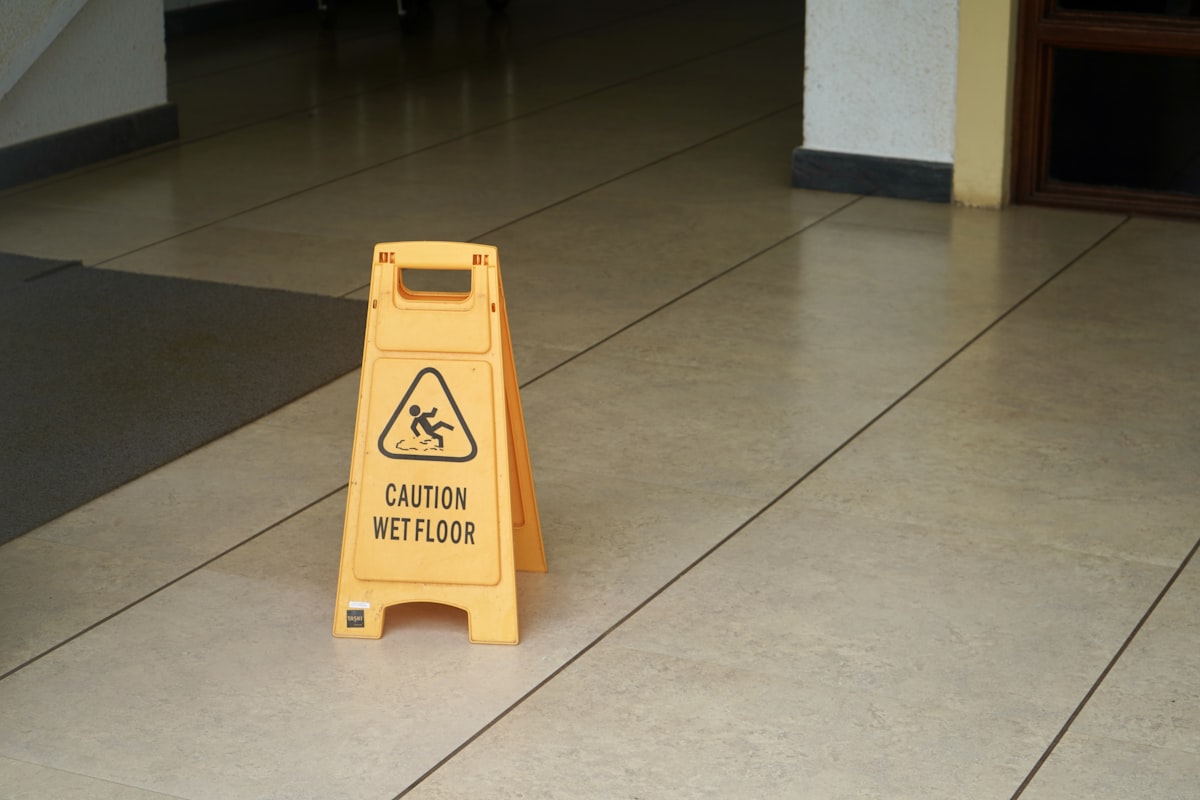
The condition also has to be one you could not reasonably avoid. Stores argue that a bright yellow cone, a roped-off aisle or an obvious puddle in plain daylight put the risk on you. Photos showing where the sign actually stood, which direction you were walking, and how the lighting looked answer that argument better than any description you give a year later.
Finally, you have to connect the fall to the injury. That means medical records that describe the mechanism of injury, imaging when it is warranted, and consistent treatment. A three-month gap between the fall and the first doctor visit gives the insurer an easy story about something else causing your pain.
What to do in the first 48 hours after a store fall
Ask for the manager on duty, describe what you slipped on and where, and ask for a copy of the incident report. Write down the manager's name. A fall with no report is the single easiest claim for a store to deny later.
Take pictures of the substance on the floor, the surrounding area, any warning signs or the absence of them, the lighting, your shoes and the ceiling above you. Employees may clean it up within minutes, and your phone photos may be the only proof it existed.
Other shoppers leave and are never found again. Ask for a name and cell number from anyone who saw you fall or saw the spill before you did. A single independent witness often decides a disputed Las Vegas premises case.
Get examined even if you think you are just sore. Tell the provider exactly how you fell and every body part that hurts, including the ones that hurt less. Gaps in treatment and missing complaints are the first things a claims adjuster points to.
Surveillance systems overwrite footage on a cycle. A written preservation letter to the store and its claims administrator, sent quickly, is what stops the video of your fall from being lost.
Consultations at Michael Hua Injury Law are free and there is no fee unless the case wins. Call (702) 487-9000 before giving a recorded statement, signing a blanket medical release, or accepting a quick check.
How long do I have to file a slip and fall lawsuit in Nevada?
Nevada gives you 2 years from the date of injury to file a personal injury lawsuit under NRS 11.190, and 2 years for a wrongful death claim. Miss that window and the claim is generally gone no matter how strong the facts were. Do not treat two years as breathing room, because the evidence that wins premises cases disappears in the first weeks.
The deadline to file suit is separate from the deadline to make an insurance claim. Insurers do not have to keep an offer open, and many stop responding once treatment ends. Filing a lawsuit is the only thing that stops the clock in NRS 11.190, and a demand letter does not extend it.
Some defendants change the analysis. A fall inside a store on government property, at an airport concession, or in a facility connected to a public entity can involve separate notice requirements that come due much sooner than the general 2-year rule. Find out early who actually owns and operates the premises rather than assuming it is the brand on the sign.
Calling an attorney in month twenty-two is not the same as calling in week one. Late calls mean no preserved video, no witness contact information, and a treating record that already has holes in it. The 2-year deadline is the outer wall, not the plan.
The costliest mistake is walking out of the store without reporting the fall and then waiting weeks to call anyone. Store surveillance video is routinely overwritten, the spill is mopped up within minutes, and the witnesses go home. Once that evidence is gone, the case becomes your word against a written incident report you never saw.
What does the store's insurance adjuster do after you fall?
The adjuster's job is to close your claim for as little as possible, as early as possible. Expect a friendly call within days asking how you are feeling, asking for a recorded statement, and asking you to sign a medical authorization. Every one of those requests helps the file they are building, not the one you are building.
A recorded statement is the most damaging thing you can hand over unprepared. Questions sound casual and answers get frozen. Saying you did not see the liquid before you stepped in it, guessing that you were walking fast, or saying you feel a little better today all show up later in a letter explaining why the offer is low. You can decline the recorded statement.
Blanket medical releases are the other trap. Signing a broad authorization lets the insurer pull years of unrelated records and then argue your back pain started long before you set foot in the store. Records relevant to the injury are fair game. Your entire medical history usually is not.
Early checks arrive with a release attached. Cashing a settlement check ends the claim permanently, including for treatment you have not had yet. If an adjuster offers to cover your urgent care visit within a week of the fall, that is a signal the liability picture worries them, not a signal the case is small.
How does Nevada's 51 percent fault rule affect a store fall?
Nevada follows modified comparative negligence. Your damages are reduced by whatever percentage of fault is assigned to you, and if you are found 51 percent or more at fault, you recover nothing. That threshold is why stores invest so much in blaming the shopper.
The usual arguments are predictable. You were looking at your phone. You were wearing flip flops on the Strip in summer. You walked past a wet floor sign. You cut through an aisle marked for employees. Any of those can shave a share off your recovery, and stacked together they are how a defense lawyer tries to push you over the 51 percent line.
Evidence beats argument here. Photos showing that the warning cone sat around the corner and not in your path, video showing you walking at a normal pace, and a witness who says the aisle was dark all pull the percentage back down. Written store inspection records showing no one checked that aisle for hours pull it down further.
Being partly at fault does not disqualify you in Nevada. Many honest slip and fall claims involve some shared responsibility. The goal is to keep your share accurate and low, which is a documentation exercise that starts the day of the fall, not the day a lawsuit is filed.
What evidence disappears first after a fall in a Las Vegas store?
Surveillance video goes first. Retail and resort systems in Las Vegas record over themselves on a set cycle, and once the footage rolls off, no one can bring it back. A written preservation letter naming the date, time, camera area and incident number, sent to the store and its claims administrator quickly, is what keeps that video alive.
The hazard itself is gone within minutes. An employee mops the spill, replaces the mat, or repairs the leaking freezer before you finish filling out the incident report. Your phone photos taken while you are still on the floor often become the only image of the condition that caused the fall.
Witnesses vanish because most shoppers in Las Vegas stores are visitors. Somebody who saw the puddle before you did might fly home to Ohio that night. A name and cell number written into your phone in the first five minutes is worth more than hours of investigation later.
Store records exist but you will not get them by asking nicely. Sweep logs, inspection checklists, prior incident reports for the same area, maintenance tickets for a recurring leak and employee statements typically come out through formal discovery once a lawsuit is filed. Knowing they exist is the reason many cases get filed rather than settled cheaply.
What does a slip and fall attorney actually do on the case?
An attorney takes over every conversation with the insurer, sends the preservation letter, orders the incident report, tracks down witnesses, gathers your medical records and bills, and puts together a demand package that lays out liability, treatment and lost income in one place. At Michael Hua Injury Law the team works the claim from the first call through settlement, and Michael Hua is the trial attorney on the cases.
Handling the medical side matters as much as the legal side. That includes making sure your treatment is documented in a way that connects to the fall, addressing health insurance and provider liens before settlement instead of after, and keeping you from the two extremes that hurt claims, which are treating for nothing and treating for everything.
When an insurer will not move, filing suit changes the leverage. Depositions of the store manager, written discovery about inspection procedures, and subpoenas for maintenance records surface facts that never appear in a claims file. A case handled by someone willing to try it is evaluated differently than a case handled by someone who never files.
The fee structure at Michael Hua Injury Law is no fee unless the case wins, and consultations are free. Nobody can tell you what a case is worth on a first phone call, and you should be careful with anyone who does. What an honest consultation gives you is a clear read on whether the facts support a Nevada premises claim and what needs to happen this week.
What if I fell in a casino, a hotel shop or outside Nevada?
Falls inside Las Vegas casinos and resort retail shops follow the same Nevada premises rules, with one practical difference. Large properties have security departments, extensive camera coverage and in-house risk management that starts working the file immediately. Ask security to document the fall, get the incident number, and request medical attention on site if you need it.
Identify who actually controls the space where you fell. A store inside a resort may be operated by a national retailer, a local licensee, a cleaning contractor or the property owner, and more than one of them can share responsibility for the floor. Naming the wrong entity wastes months, and the 2-year deadline under NRS 11.190 keeps running while that gets sorted out.
If your fall happened outside Nevada, Michael Hua is licensed in Nevada and the case is referred to an attorney licensed in that state. Deadlines and fault rules vary, so do not assume Nevada's 2-year limit applies to a store fall in California or Arizona. Call anyway rather than waiting, because a referral moves faster than starting from scratch.
If you are visiting Las Vegas and fell here before flying home, the case is still a Nevada case. You can usually continue treatment in your home state while a Nevada attorney handles the claim. Get the incident report and photos before you leave town, because coming back for them is not realistic.
Questions people ask next
How much does a slip and fall lawyer cost in Las Vegas?
At Michael Hua Injury Law the consultation is free and there is no fee unless the case wins. That means you do not write a check to start, and the attorney fee comes out of the recovery rather than out of your pocket up front. Before you sign anything, ask any Las Vegas firm to explain the percentage, whether it changes if a lawsuit is filed, and how case costs like medical record fees and expert charges are handled at the end. Get those answers in writing in the fee agreement so there are no surprises when the case resolves.
What if I did not report the fall to the store that day?
You can still bring a claim in Nevada if you did not fill out an incident report, but you should report it in writing as soon as you realize you are hurt. Call the store, ask for the manager on duty, and follow up with an email or a letter so there is a dated record. Adrenaline hides injuries, and plenty of people walk out of a Las Vegas store feeling fine and wake up the next morning unable to turn their neck. Expect the insurance adjuster to argue the delay means you were not really hurt, and expect to answer that with medical records showing when symptoms started and what your doctor found.
Do I have to give the store's insurance company a recorded statement?
No. You are not required to give a recorded statement to the store's liability insurer or its third party claims administrator. Adjusters ask early, while you are medicated and before anyone knows how bad the injury is, and the answers get quoted back at you months later. Common traps include agreeing you were in a hurry, guessing at how long the spill had been there, or saying you feel better today. You can decline politely, ask for the request in writing, and have a Nevada attorney handle communication instead.
What if the store says the fall was partly my fault?
Nevada uses modified comparative negligence. Your recovery is reduced by your share of fault, and you recover nothing if you are found 51 percent or more at fault. Stores raise this constantly by pointing to a wet floor sign, your shoes, your phone, or an aisle you were not supposed to be in. Being somewhat at fault does not end a Nevada claim by itself. What matters is how the fault is split, which is why photos of the hazard, the lighting, the sign placement and the exact spot you fell matter so much.
I fell in a store in another state. Can a Las Vegas firm help?
Michael Hua is licensed in Nevada and handles Nevada cases. If your fall happened in California, Arizona, Utah or anywhere else outside Nevada, the case gets referred to an attorney licensed in that state. Deadlines, notice rules and fault rules are different from state to state, so do not assume Nevada's 2-year deadline under NRS 11.190 applies to a fall somewhere else. Call and ask anyway rather than sitting on it, because the referral itself is faster than starting your search over.
How long does a Las Vegas slip and fall case take?
There is no standard timeline, and any firm that promises one is guessing. Most cases do not settle until you finish treatment or reach a point where your doctor can describe what is permanent, because that is when the full value of the medical care and lost income is known. Cases that settle after a demand letter move faster than cases where a lawsuit is filed and depositions are taken. Nevada's 2-year deadline under NRS 11.190 is the outside limit for filing suit, not a target, and waiting until month 23 to call an attorney narrows what anyone can do.
Talk to someone about your own case
General guidance only goes so far. Tell us what happened and we will look at your situation for free.
This guide is general information about how injury claims usually work, not legal advice about your case. Reading it does not create an attorney-client relationship. Deadlines and rules change and exceptions apply, so confirm anything you plan to rely on with an attorney. Michael Hua is licensed in Nevada; claims arising in other states are referred to an attorney licensed there.
Written with AI assistance and published automatically. Laws and deadlines change, so this may be out of date. Call us and we will tell you what applies to your case today.